The beginning
It all started with a spreadsheet.
Before the meeting that decided the deal, the best seller in the company—the one who was going to win it—would close every tool we had bought and open a spreadsheet.
I watched that happen at a company doing $500K. I watched it again at $50M. I watched it at $500M, inside an organization with an ops team, a security review, and a training calendar wrapped around a seven-figure stack. Different companies, different decades of software, same quiet verdict on all of it.
I have spent my career running go-to-market, and I got to run it three times at three sizes that have almost nothing in common.
The first was zero to one. Funderbolt was my company, and I was its president. We applied game theory to university fundraising, in a market where everyone else treated a campaign like a page you publish and hope for. By our internal numbers, our campaigns raised about $15,000 on average, against roughly $500 on general crowdfunding platforms. That is go-to-market at $500K, where nothing exists until you make it exist and every deal is hand-built by the person who wants it most.
The second was blitzscale. I sold Funderbolt to CampusLogic in March 2019 and stayed on as a director. CampusLogic was growing at a blitzing pace—Inc. 151 the year I joined—and go-to-market at roughly $50M is a different job entirely. You stop inventing the motion and start running a machine: hiring ahead of the plan, teaching people who will never meet the founder, defending a category while a competitor is trying to define it out from under you. I was there through the acquisition.
The third was global. CampusLogic landed inside Ellucian, and I stayed as a director there to see go-to-market at roughly $500M. Committees. Regions. Procurement and security and legal as real gates rather than steps. Partners who could carry you or quietly sink you. Deals with more people in them than my first company had customers.
Same job, same quota language, three completely different games.
At $500K you are trying to be found. At $50M you are trying to be chosen. At $500M you are trying to be governed, staffed, and defended across a buying committee you may never see in one room. The moves that win are different at every level, and almost nobody says that out loud.
I was not watching go-to-market fail. I was watching it win. We hit the number at zero to one, we hit it through the blitzscale, and we hit it at global scale, and I learned each of those games well enough to teach them. That is the part people miss when they talk about what is wrong with this profession. The waste does not show up as losing. It shows up inside the wins.
The best player of that game I ever watched was our CRO at CampusLogic, Allison Duquette. I had never seen a mind work a sale like hers. While the rest of us saw a promising meeting, Allison saw the system around it: the person we had not considered, the concern no one had said aloud, the decision that would happen after we left, and the move that would matter three steps later. She was relentlessly methodical, but never mechanical. She made the problem clearer, the path feel possible, and the standard impossible to ignore. Then she kept hitting the number.
What I kept noticing
Everyone had the tools. The tools were not very good.
At every size, the technology to play the game was non-optional. You did not really choose it. Data brokers and enrichment to know who exists. Intent to know who is stirring. Sequencers to reach them, conversation intelligence to record what they said, enablement to teach the team what to say next, forecasting to roll all of it up, and the CRM underneath holding the record. At $500K it was a few tools on a credit card. At $500M it was a governed stack with an ops team, a budget line, a security review, and a training calendar.
I bought this software. I ran it. I stood up in front of teams and trained them on it. And the closer I looked, the more primitive it seemed. Contact data wrong often enough that you checked it by hand. Intent that lit up for anything and meant nothing in particular. Sequencers whose only real skill was volume. Enablement libraries nobody opened twice. Forecasting that was a spreadsheet with a login and a worse interface. Each one did a narrow slab of the job, none of them talked to each other, and not one of them understood the account.
The stack got bigger at every step. What it told us about the deal did not.
We had bought plumbing and been sold intelligence. Every tool could tell you what had already happened—who opened, who attended, what stage it sat in—and not one could tell you what to do about the deal in front of you on Thursday.
And we still won. That is the part that kept me up. Good teams win with bad tools every quarter, and the industry reads the win as proof the tools worked. What I saw was the bill: hours spent verifying data we had paid for, meetings walked into blind because the real briefing lived in someone’s head, deals re-learned from scratch when an owner changed, and second-best moves made confidently because nobody had the time to find the best one.
We won anyway. We just paid far too much for it, every time.
Which brings us back to the spreadsheet. A tab per account. Names of people who were nowhere in the CRM. A column for who was quietly against us. A note about the VP who had to be handled before the demo, and what to do if procurement moved first. Color coding only they understood.
That spreadsheet was the strategy, and everything we had bought sat downstream of it. The system knew the stage, the amount, the close date, and the last activity; it did not know the plan, and it had nowhere to put one. So the plan stayed in a personal file. It was never reviewed, never taught, never inherited by the rep who picked up the account next—and it left the building the day that seller did.
We did what everyone does. Adoption pushes. Hygiene rules. Fields made mandatory so the pipeline review would have something to read. Training on the tool that was supposed to replace the tab. And the tab came back every time, because the seller was not being lazy. That file was the only artifact in the company that matched the shape of the actual work.
That was the thought I could not put down. Maybe none of this was ever built by sellers. It was built to report on selling—designed for the person reviewing the deal, sold to the person reviewing the deal, and then handed to the person working it. Which is why the most important intelligence in the company lived inside a handful of people like Allison, and disappeared the moment they left the room.
Two phone calls
Then I called Tom.
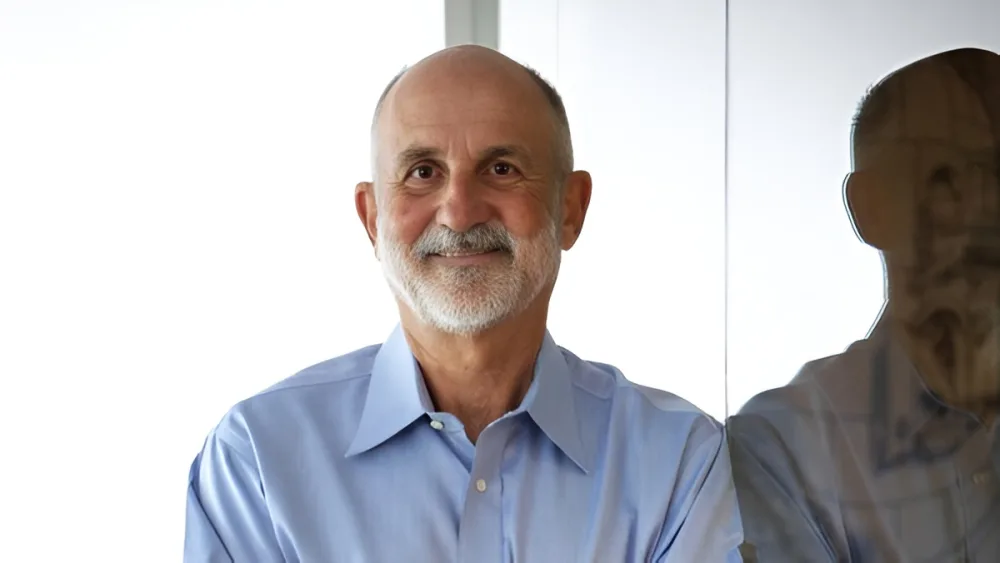
If Arizona’s venture ecosystem has a godfather, it is Tom Curzon. He spent four decades at Osborn Maledon as outside general counsel to emerging companies, walking hundreds of founders through the moments that decide whether a company becomes enduring or disappears. He has sat on the board of the StartupAZ Foundation since 2016, and chaired it from 2018 to 2022. He had been an advisor to Funderbolt, which means he has watched me be wrong before. He is not an easy man to impress, and he has heard more first pitches than anyone I know.
I told him what I had been watching for a decade. Then I said the part I had not said out loud yet.
“Tom, all of this is still quite primitive. What if we…”
I am not going to write the rest of that sentence on a public page. He listened to the whole thing, and then he said, “I’m intrigued.”
And then I called Allison. She had spent those years doing by hand, brilliantly, the thing I wanted to build, so hers was the opinion that could end the idea in a sentence. I told her the whole thing. Her answer is the reason I gave it the next several years of my life.
“Ross, you’re talking about the holy grail.”
So we started where the existing stack went quiet. Who is really in the decision room? What changed inside the account? Which relationship can open the right door? Where is the team mistaking activity for progress? What move could create momentum now?
The years in between
Why does anyone open anything?
I spent years studying three things at once: the problem, the technology, and the human side. The human side was the one that would not let go of me. People will spend hours a day inside Instagram and never once open the enablement tool they were trained on. That is not a discipline problem, and no amount of adoption reporting fixes it. One of those gives you something the second you arrive. The other asks you to feed it first.
The architecture question stayed open just as long. Should this be a strategy layer that tells a company how to play the game, or on-call intelligence that sits beside a seller at the moment of the move? Both answers are defensible, and each one builds a different product. We argued about it, built toward it, and tinkered.
Getting a machine to say something about an account is easy, and it is why so much of this category sounds clever and helps nobody. The hard part is that a confident wrong answer costs a seller a meeting they cannot get back, and costs you their trust the first time it happens. That constraint set the standard for everything we built.
So the work made the idea more honest. An enterprise pursuit is not a board game. The state is incomplete. People change their minds. Trust matters. A system that pretended to know more than the evidence could support would make the seller worse, not better. It had to show its work. It had to preserve uncertainty. And it could never remove the human from the decision.
The turn
Then AI sat down on the other side of the table.
We tinkered for years on a problem that was hard but stable. Then the buyer changed. In a 2026 Gartner survey of 645 B2B buyers, 45% had used generative AI in a recent purchase. Reading the inbound email and deciding what deserves a reply. Pulling the claims out of a proposal and checking them against the requirements. Assembling the shortlist before anyone takes the next call.
A real part of every evaluation now happens with no seller in the room.
Sit with that, because it is bigger than a productivity story. For decades this profession optimized around persuading the buyer. Now you also have to be legible to the intelligence helping the buyer decide—and your best seller, the one with the spreadsheet, is not there when your product is compared, priced, and ranked against two others.
Then the same survey turned it again: 69% of those buyers still go to a sales rep to validate what the AI told them. That is the whole thing in one number. AI is not removing the seller; it is changing what the buyer needs a seller for. The rep who repeats what the machine already said is worth less every quarter. The one who can say “that is broadly right, and here is what it misses about your situation” is worth more than they have ever been.
Meanwhile our own side started manufacturing outreach with AI at enormous scale. Generating a message is free now; earning attention is the scarce thing. Being generic stopped being wasted effort and became permanent invisibility.
Buyers got dramatically better at buying. Sellers have to get dramatically better at selling.
That was the moment the tinkering stopped. The game had shifted underneath everyone, it had gotten harder in a way effort alone does not solve, and it plainly needed a new set of tools—not another generator bolted onto the stack that was already failing the seller with the spreadsheet. We had spent years building for a version of this. It arrived earlier and sharper than we expected. See the full picture of what changed.
The vision
Transform the future.
The mission
1 million companies hitting their number.
Our first product, Adrata, is an AI for revenue leaders and AEs. It reads the people, pressure, and paths inside every sales account. It brings together the way in, the reason it is now, the people who decide, the evidence the team can trust, and the next move worth inspecting. The CRM records the deal. Adrata helps the team work it. I asked Allison to help me build it. She said yes.
The breakthrough
And then, one day, it started to work.
The system read the account, held the position in view, and put up tactical recommendations a strong seller would recognize as right—and then took the next action instead of describing it. Not a summary of the deal. A move inside it. $500K to $500M, and the plan had lived in a spreadsheet the whole way. This was the first time I had seen it live anywhere else.
In that moment, the impossible became real.
Where we are
Adrata is in early access.
Every company I have worked inside had parts of its go-to-market quietly broken, and everybody there knew which parts. The founder knew the motion did not survive contact with the second market. The leader knew the forecast was a negotiation. The seller knew the system had nothing to say about the account they were about to lose. The engineer knew the data was worse than anyone admitted in the meeting.
Years of research and tinkering went into what we ended up with, and I am not going to lay it out on a company page. What I will say is that it is not another wrapper on the stack that was already failing the seller with the spreadsheet, and that we believe it is the strongest answer anyone has built to this problem.
This gets built. The buyer already has the advantage; somebody is going to put an equal one beside the seller, and close the distance between the plan that wins deals and the system the company actually runs on. Every quarter that passes makes that more obviously the job. We intend to be the ones who do it, and we are taking on a small number of revenue teams at a time to get there—working with each one directly, because the system gets sharper the closer we sit to a real pursuit. Every pursuit makes the system smarter, and every outcome compounds into better judgment on the next one. There is no self-serve sign-up, and that is on purpose.
Bring us the deal you cannot afford to lose. We would rather show you than tell you.

Ross Sylvester
CEO, Co-Founder