Lights On, Lights Off
The best career advice I ever received fit in one sentence. It had nothing to do with strategy, positioning, or personal brand. It was about a light switch.
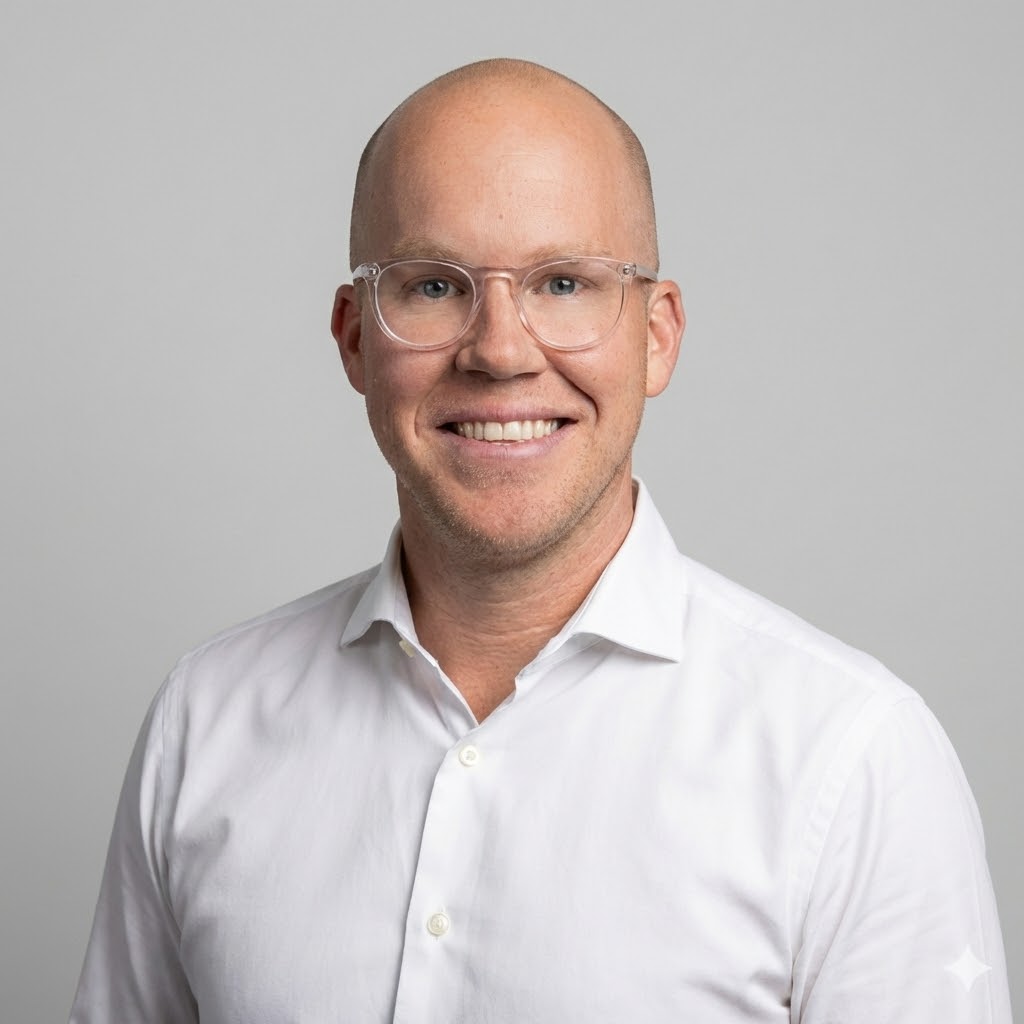
Ross Sylvester | Co-Founder & CEO | Feb 2026 | 8 min read | Signal
Fifteen years ago, I was sitting in Steve Silver's living room in Delaware. One of those houses where the yard stretches far enough that you stop noticing where it ends. Big trees. The kind of quiet that only happens in places where people have been settled for a long time.
I was nervous. Not about the conversation with Steve -- he was family, a person I trusted completely. I was nervous about what was coming the next morning. A job interview for a role I wanted badly and was not sure I deserved.
Steve could tell. He didn't ask me about the role or the company or what questions they might ask. He didn't walk me through STAR frameworks or suggest I research the interviewer's LinkedIn. He sat back and said something that I have repeated to myself more times than any business book, any podcast, any keynote.
"When they ask you why you, say this: I will turn the lights on here. And I will turn them off. And I will outwork everyone in between."
That was it. No caveat. No follow-up framework. Just the lights and what happens between them.
What Steve Was Actually Saying
On the surface, this sounds like a work ethic speech. First one in, last one out. Grind. The advice you hear from every motivational account and promptly ignore because it doesn't feel actionable.
But Steve wasn't talking about hours. He was talking about something more specific: the willingness to be the person who owns the building. Not the figurehead. Not the strategist. The person who takes responsibility for whether the place runs.
The person who turns the lights on is the one who shows up before there is anything to react to. Before the emails arrive, before the Slack messages start, before the first meeting of the day. They show up to the empty room and decide what matters. That is not a time management trick. It is a statement of intent: I am not here to respond to the day. I am here to set it.
The person who turns the lights off is the one who stays after the decisions are made to make sure they land. Who follows up on the thing that got agreed to in the 3 PM meeting. Who notices that the action item from Tuesday didn't get done and does it themselves rather than sending a reminder email on Friday. Turning the lights off means you are the last checkpoint before things fall through cracks.
And outworking everyone in between is not about doing the most stuff. It is about doing the work that matters with an intensity that is visible to anyone paying attention. Not performative busyness. Real output. The kind where people look at what you produced and cannot figure out how one person did that much in one day.
The Compound Effect of Showing Up
There is research behind what Steve knew intuitively. Angela Duckworth's work on grit -- sustained passion and perseverance toward long-term goals -- found that grit predicts achievement across domains more reliably than talent, IQ, or circumstance.^1^ West Point cadets who scored highest on grit were 60% more likely to complete Beast Barracks, the notoriously difficult summer training that eliminates roughly 5% of each entering class. The ones who survived were not the fastest, strongest, or smartest. They were the ones who kept showing up.
Anders Ericsson's research on deliberate practice, often reduced to the "10,000-hour rule," makes a more nuanced point that aligns with what Steve described.^2^ It is not just about time invested. It is about the quality of engagement during that time. The musicians who became world-class didn't just practice more hours. They practiced with full concentration during those hours, working at the edge of their ability, never coasting.
Turning the lights on is the practice of preparation. Turning them off is the practice of completion. The hours in between are the practice of intensity. All three, sustained over years, produce something that looks like talent to anyone who wasn't watching the process.
Why This Matters More Now Than It Did Fifteen Years Ago
When Steve gave me this advice, the competitive landscape was different. Showing up early and leaving late was a differentiator because not many people did it. The marginal effort was visible.
In 2026, something has changed. AI has compressed the execution layer of almost every knowledge job. The email that used to take thirty minutes takes three. The research that used to take a day takes an hour. The proposal that used to take a week takes an afternoon.
This means the raw volume of output is no longer a meaningful differentiator. Everyone can produce more, faster, with less effort. The person who used to stand out for doing the work of two people is now competing against a world where AI makes everyone capable of the output of three.
So what differentiates?
The same thing Steve described, translated to a world where execution is cheap: the willingness to do the thinking that machines cannot do, with the intensity and consistency that most people will not sustain.
Turning the lights on in 2026 means being the person who shows up before the AI has anything to work with. Who defines the problem before delegating it. Who understands the customer deeply enough to know that the AI-generated email is almost right but misses the one thing that matters. The person who turns the lights on sets the direction. AI accelerates the journey. But acceleration without direction is just faster confusion.
Turning the lights off means being the person who reviews the AI output and catches the error that would have gone to the client. Who stays with a problem after the obvious solution is generated to ask whether the obvious solution is actually the right one. Who closes the loop on the initiative that everyone assumed was done because the AI produced a deliverable, but nobody verified whether the deliverable solved the actual problem.
And outworking everyone in between means bringing the cognitive intensity that makes AI useful instead of just fast. The rep who uses AI to generate ten account plans in an hour but spends zero time verifying whether those plans reflect reality has produced nothing of value. The rep who generates ten plans and then spends four hours pressure-testing each one against what they know about the account -- calling a contact, checking a recent earnings transcript, validating the org chart -- has produced something worth acting on.
The lights are the same. The work between them is different. But the principle Steve articulated hasn't changed: be the person who owns it, start to finish.
The People I've Watched Win
I've been building companies for a decade now. The pattern I see in the people who consistently outperform has nothing to do with credentials, charisma, or connections. It has everything to do with the lights.
The best rep I've ever worked with was not the most articulate or the most experienced. She was the one who reviewed every deal in her pipeline every morning before standup -- not because she was told to, but because she needed to know where each one stood before the day started. She turned the lights on.
The best engineer was not the one with the most impressive resume. He was the one who, after shipping a feature, went back and read every support ticket related to the area he'd touched, looking for edge cases the team hadn't considered. He turned the lights off.
The best leader was not the loudest or the most visionary. She was the one who, in every meeting, asked the question nobody wanted to ask and then stayed after the meeting to make sure the answer got turned into action. She outworked everyone in between.
None of these behaviors require extraordinary talent. They require something rarer: the willingness to do the unglamorous work of ownership, consistently, when nobody is watching and nobody is keeping score.
A Note About Sustainability
Steve's advice can be misread as an endorsement of burnout culture. First in, last out, never stop. That is not what he meant, and it is not what I'm saying.
Turning the lights on and off is not about working the most hours. It is about owning the bookends of the day -- the start and the finish -- with intention. Some days, turning the lights on means thirty minutes of focused preparation before the first meeting. Some days, turning the lights off means ten minutes of writing down what still needs to happen tomorrow.
The point is not quantity. It is responsibility. The person who turns the lights on has decided that they are not a passenger in their own day. The person who turns the lights off has decided that they do not leave things unfinished for someone else to catch.
Between those bookends, the work should be intense but bounded. Ericsson's research found that peak performers in every domain studied -- musicians, athletes, chess players -- averaged about four hours of deeply focused practice per day.^2^ Not twelve. Not sixteen. Four. The rest was recovery, reflection, and ordinary life.
The trick is that most people don't even get the four hours. They show up without preparation, spend the day reacting, leave without closing loops, and wonder why the person next to them seems to produce twice as much. The answer is the lights.
What I Said the Next Morning
I got the job. I don't remember most of the interview. I remember one moment.
They asked me why they should hire me instead of the other candidates. I had prepared answers about my experience, my skills, my track record. I set all of that aside.
"I'll turn the lights on," I said. "And I'll turn them off. And I'll outwork everyone in between."
The interviewer paused. Then smiled. Then moved on to the next question. I knew it had landed, not because it was clever, but because it was specific. It described a way of operating, not a set of qualifications. Qualifications tell you what someone has done. Operating principles tell you what they will do.
Fifteen years later, I still try to be the person Steve described. Some days I succeed and some days I don't. But the standard is always there, as clear as a light switch.
Thank you, Mr. Silver. The house in Delaware, the big yard, the quiet confidence with which you said the truest thing anyone ever told me about work. I carry it every day.
For Steve Silver, who made the most important things simple.
Endnotes
^1^ Duckworth, Angela L., Peterson, Christopher, Matthews, Michael D., and Kelly, Dennis R. "Grit: Perseverance and Passion for Long-Term Goals." Journal of Personality and Social Psychology 92, no. 6 (2007): 1087-1101. Grit predicted completion of West Point's Beast Barracks better than SAT scores, high school rank, leadership potential score, or physical aptitude. See also: Duckworth, Angela. Grit: The Power of Passion and Perseverance (Scribner, 2016).
^2^ Ericsson, K. Anders, Krampe, Ralf Th., and Tesch-Romer, Clemens. "The Role of Deliberate Practice in the Acquisition of Expert Performance." Psychological Review 100, no. 3 (1993): 363-406. Elite violinists at the Berlin Academy averaged approximately four hours of focused practice per day, compared to fewer than two for less accomplished peers. See also: Ericsson, K. Anders, and Pool, Robert. Peak: Secrets from the New Science of Expertise (Houghton Mifflin Harcourt, 2016).